
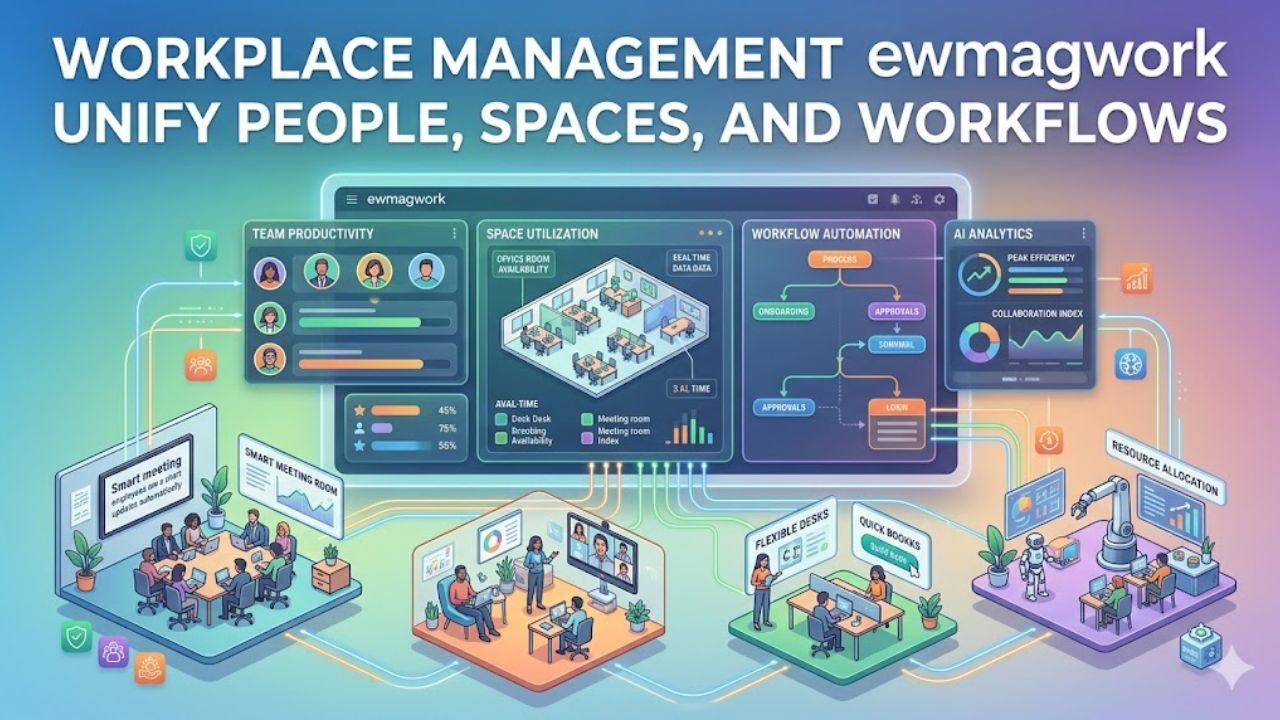
Workplace management ewmagwork represents a modern approach to organizing people, processes, and workplace resources to achieve sustainable business success. Companies today operate in hybrid, digital, and highly competitive environments, making structured workplace systems more important than ever. This concept combines operational management, employee experience, and technology integration into one unified strategy. Organizations that adopt workplace management ewmagwork often experience improved collaboration, higher productivity, and stronger workplace culture. Instead of focusing only on administration, this model emphasizes efficiency, communication, and long-term organizational growth.
Businesses increasingly recognize that workplaces are no longer limited to physical offices. Remote work, digital collaboration platforms, and flexible scheduling demand smarter management systems. Workplace management ewmagwork addresses these challenges by aligning workforce goals with organizational objectives. It enables leadership teams to monitor performance while maintaining employee satisfaction. As companies evolve, workplace management ewmagwork becomes a foundation for operational excellence and future readiness.
Core Principles Behind Workplace Management Ewmagwork
Quick Bio
| Field | Details |
|---|---|
| Article Title | Workplace Management Ewmagwork: The Complete Modern Workplace Strategy Guide |
| Focus Keyword | workplace management ewmagwork |
| SEO Category | Workplace Management / Business Strategy |
| Content Type | Informational Long-Form Article |
| Search Intent | Informational |
| Keyword Usage | 5–7 Natural Placements |
| Reading Level | Professional & Business Audience |
| Content Length | Long-Form SEO Article |
| Optimization Style | Semantic SEO + Rank Math Optimized |
| Main Topic | Modern Workplace Management Systems |
| Core Coverage | Productivity, Culture, Technology Integration |
| Target Audience | Business Owners, HR Managers, Team Leaders |
| SEO Structure | H1, H2, H3 Semantic Headings |
| Included Elements | Stats, FAQs, Structured Content |
| Publishing Goal | Higher Rankings & User Engagement |
| Content Purpose | Education + Authority Building |
| Update Frequency | Recommended Quarterly Updates |
| Ideal Platform | Blog, Business Website, Corporate Portal |
Employee-Centered Workplace Structure
At the heart of workplace management ewmagwork lies the belief that employees drive organizational success. Companies adopting this strategy focus on creating environments where workers feel supported, valued, and empowered. Employee well-being, professional development, and work-life balance become essential operational priorities. When individuals feel connected to their workplace, engagement and innovation naturally increase. This human-focused approach helps reduce turnover and strengthen long-term workforce stability.
Modern workplaces emphasize communication transparency and leadership accessibility. Managers must act as facilitators rather than controllers, encouraging collaboration across departments. Workplace management ewmagwork promotes shared responsibility, where teams actively contribute to problem-solving and innovation. Such environments foster trust and motivation, leading to measurable business outcomes. Ultimately, employee-centric management strengthens organizational resilience.
Technology Integration and Smart Workflows
Technology plays a crucial role in workplace management ewmagwork by simplifying complex operational processes. Digital tools help organizations track performance metrics, manage schedules, and streamline internal communication. Automation reduces repetitive tasks, allowing employees to focus on creative and strategic responsibilities. Companies that embrace digital transformation through workplace management ewmagwork gain competitive advantages in efficiency and decision-making.
Smart workflows also support data-driven management practices. Leaders can analyze productivity trends, collaboration patterns, and project outcomes more effectively. This insight enables faster adaptation to market changes and internal challenges. Workplace management ewmagwork therefore connects human talent with technological innovation. The result is a workplace that operates intelligently rather than reactively.
Key Benefits of Workplace Management Ewmagwork for Organizations
Organizations implementing workplace management ewmagwork often report noticeable operational improvements within months. Structured management systems create clarity in roles, responsibilities, and expectations. Employees understand organizational goals and align their efforts accordingly. Increased transparency reduces workplace conflicts and improves communication across teams. These benefits collectively enhance business performance and employee satisfaction.
Another major advantage is improved productivity through optimized resource allocation. Companies can manage workspace usage, project timelines, and workforce availability more effectively. Workplace management ewmagwork also strengthens adaptability during organizational change or rapid growth. Businesses become more agile because processes are standardized yet flexible. This balance ensures both stability and innovation within the workplace environment.
Strategic Components of an Effective Workplace Management Ewmagwork Model
Leadership and Organizational Culture
Leadership plays a defining role in successful workplace management ewmagwork implementation. Managers must cultivate a culture built on accountability, collaboration, and continuous improvement. Strong leaders communicate vision clearly while encouraging feedback from employees. Workplace culture becomes a shared responsibility rather than a top-down directive. Such alignment fosters loyalty and sustained organizational momentum.
An effective culture encourages learning and adaptability. Training programs, mentorship initiatives, and performance evaluations support employee growth. Workplace management ewmagwork integrates these cultural practices into daily operations rather than treating them as occasional initiatives. Over time, organizations develop a unified identity centered on productivity and respect. This cultural consistency strengthens brand reputation and workforce confidence.
Workplace Design and Operational Efficiency
Modern workplace design extends beyond aesthetics to include functionality and productivity. Workplace management ewmagwork considers how physical and digital spaces influence employee performance. Flexible workstations, collaborative areas, and quiet zones help employees work according to task requirements. Efficient workspace planning reduces distractions and enhances focus. Thoughtful design ultimately improves both morale and operational outcomes.
Operational efficiency also depends on clear workflows and standardized procedures. Companies implementing workplace management ewmagwork streamline approvals, reporting systems, and communication channels. Reduced bureaucracy allows teams to execute projects faster. Efficient operations lower costs while improving output quality. These improvements create a sustainable workplace ecosystem.
Workplace Management Ewmagwork and Employee Productivity Growth
Productivity growth remains one of the strongest outcomes associated with workplace management ewmagwork. Employees perform better when expectations are clear and resources are accessible. Structured collaboration tools minimize confusion and eliminate redundant tasks. Organizations experience smoother project execution and faster decision-making cycles. Productivity improvements often translate directly into increased profitability.
Another productivity factor involves employee engagement. Workplace management ewmagwork encourages recognition programs and performance feedback mechanisms. Employees feel motivated when achievements are acknowledged and career pathways are visible. Engaged teams demonstrate higher creativity and stronger problem-solving abilities. Over time, consistent engagement builds a high-performance organizational culture.
Challenges Businesses Face Without Workplace Management Ewmagwork
Organizations lacking structured workplace management frequently encounter operational inefficiencies. Communication gaps, unclear responsibilities, and poor resource allocation can slow progress. Without workplace management ewmagwork, businesses struggle to maintain consistency across departments. Employees may experience burnout due to unclear expectations or inefficient workflows. These challenges often lead to decreased morale and productivity.
Rapid technological change further complicates workplace management for unprepared organizations. Companies without integrated management systems face difficulties adapting to remote or hybrid work models. Workplace management ewmagwork provides the framework necessary to manage these transitions effectively. By addressing operational weaknesses early, organizations prevent long-term performance issues. Structured management ultimately protects both employee well-being and business stability.
Future Trends Shaping Workplace Management Ewmagwork
The future of workplace management ewmagwork will be shaped by artificial intelligence, automation, and data analytics. Businesses increasingly rely on predictive insights to guide workforce planning and operational decisions. Flexible work arrangements will continue to expand, requiring adaptable management systems. Workplace strategies will prioritize employee experience alongside productivity metrics. Organizations that embrace innovation will remain competitive in evolving markets.
Sustainability and workplace wellness will also influence management strategies. Companies aim to create environments that support mental health and environmental responsibility. Workplace management ewmagwork aligns operational efficiency with ethical workplace practices. Future workplaces will emphasize collaboration, inclusivity, and continuous learning. These trends ensure that workplace management ewmagwork remains relevant in the long term.
Statistical Insights Supporting Workplace Management Ewmagwork
Research across global workplaces highlights the effectiveness of structured management systems. Organizations adopting modern workplace strategies report productivity improvements ranging from 20% to 30%. Employee engagement levels increase significantly when workplaces prioritize communication and flexibility. Hybrid work models supported by workplace management ewmagwork show reduced absenteeism and higher job satisfaction rates. Companies integrating technology-driven management practices achieve faster project completion times compared to traditional systems.
These statistics demonstrate that workplace management ewmagwork is not merely a trend but a measurable business strategy. Data-driven management helps leaders identify performance gaps early. Organizations become proactive rather than reactive in addressing workplace challenges. Over time, measurable improvements strengthen overall business sustainability.
Image Suggestions with Alt Text Ideas
Suggested visual content for this article includes modern office collaboration environments showing teamwork and digital workspace management concepts with alt text such as “workplace management ewmagwork modern office collaboration.” Another suitable image concept involves hybrid employees working through digital dashboards representing smart workflow systems with alt text “digital workplace management ewmagwork strategy visualization.” A third image idea features leadership meetings demonstrating organizational culture and productivity planning with alt text “workplace management ewmagwork leadership strategy session.” Visual illustrations of workspace design layouts can also support the topic using alt text “efficient workplace management ewmagwork office design concept.” These visuals help reinforce semantic relevance while improving user engagement.
FAQs
1. What is workplace management ewmagwork?
Workplace management ewmagwork is a modern organizational strategy focused on optimizing employees, technology, and workplace processes for better productivity.
2. Why is workplace management ewmagwork important?
It improves efficiency, employee engagement, collaboration, and overall business performance in modern workplaces.
3. Who should implement workplace management ewmagwork?
Businesses of all sizes, including startups, enterprises, and remote organizations, can benefit from structured workplace management systems.
4. Does workplace management ewmagwork support hybrid work?
Yes, it helps organizations manage remote, hybrid, and in-office teams through flexible operational frameworks.
5. How does workplace management ewmagwork increase productivity?
By streamlining workflows, improving communication, and aligning employee goals with organizational objectives.
Conclusion
Workplace management ewmagwork has emerged as a powerful framework for organizations seeking efficiency, productivity, and employee satisfaction in a rapidly changing business landscape. By combining technology integration, leadership development, and employee-focused strategies, companies create workplaces that support innovation and long-term growth. Modern businesses must move beyond traditional management practices and adopt structured systems capable of supporting hybrid work environments. Workplace management ewmagwork enables organizations to align operational goals with human potential, ensuring sustainable performance improvements. As workplace expectations continue to evolve, this management approach provides the adaptability required for future success.
Read More: Connections Hint Today Forbes Simple Daily Help for NYT Connections Fans